
SIHE Product
SIHE-Manufactured ResinSIHE 8200 SMC/BMC Moulding Resin
SIHE 8200 is an unsaturated polyester resin described as having medium-to-high viscosity and moderate reactivity for developing SMC/BMC compounds and compression-moulded FRP parts after validating the thickener, filler, reinforcement, and moulding cycle.
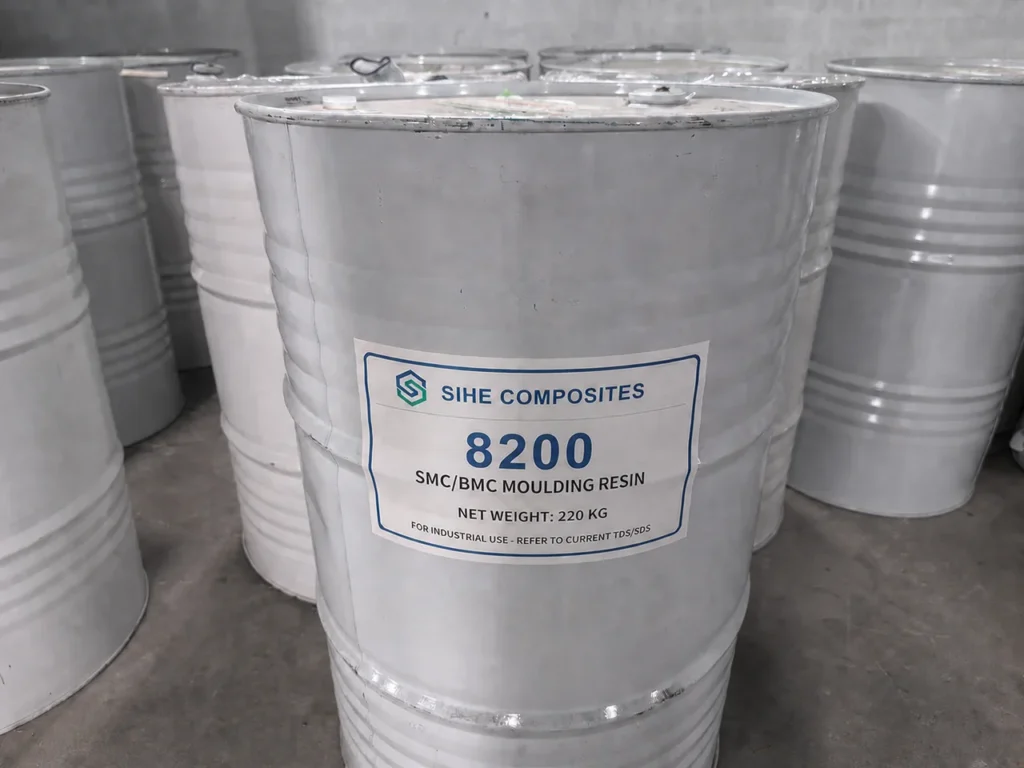
SIHE model 8200
SIHE 220 kg Resin Packaging
SIHE 8200 is an unsaturated polyester resin described as having medium-to-high viscosity and moderate reactivity for developing SMC/BMC compounds and compression-moulded FRP parts after validating the thickener, filler, reinforcement, and moulding cycle.
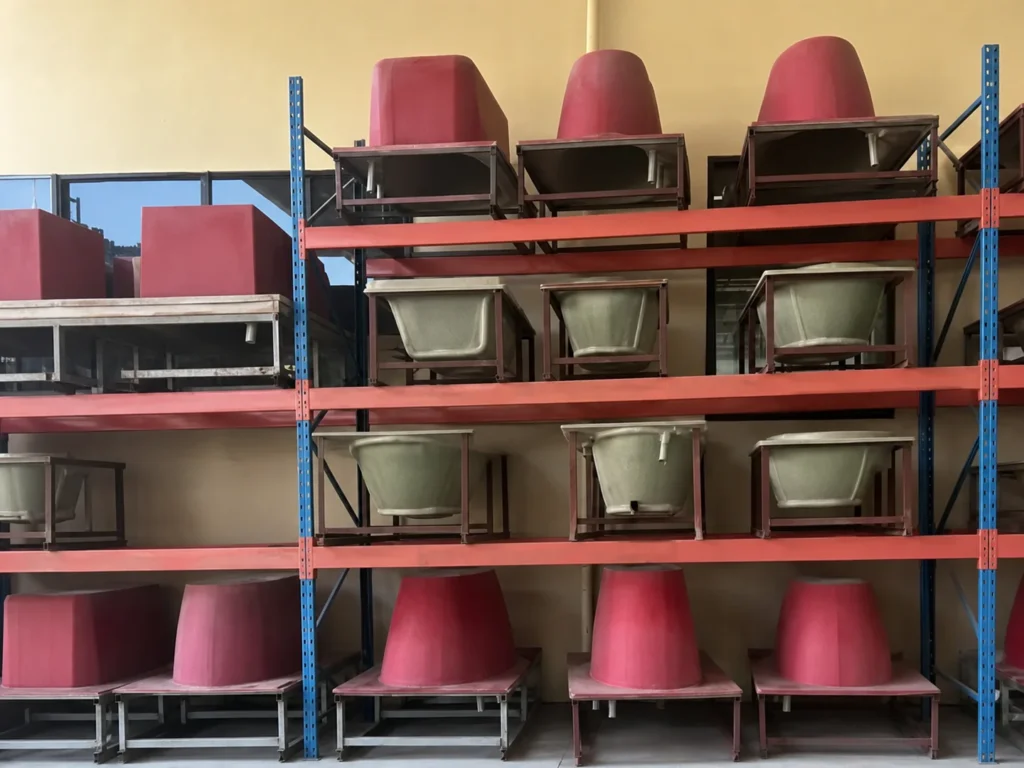
Application outcome
Finished Products Made with This Resin Family
Real moulded composite components are shown as an application outcome for the 8200 selection direction. Final use of 8200 must still confirm the SMC/BMC formulation, fibre and filler loading, mould flow, press cycle, surface target and required mechanical performance.
Typical applications
- Sheet Moulding Compound (SMC)
- Bulk Moulding Compound (BMC)
- Compression-moulded composite parts
- FRP profiles and components using a validated compound
Process fit
Applicable Process Scenarios
Recommended processes
- Trial-based SMC/BMC compound preparation
- Compound viscosity and maturation monitoring
- Compression moulding at validated temperature, pressure, and time
- Finished-part flow, surface, shrinkage, cure, and mechanical checks
Selection priorities
- Red turbid liquid appearance from the exact-model inspection source
- 25 °C viscosity, acid value, and non-volatile content have published ranges and methods
- Reaction and fast-cure direction are described qualitatively by the source
- Suitable for compound development after stability and flow evaluation
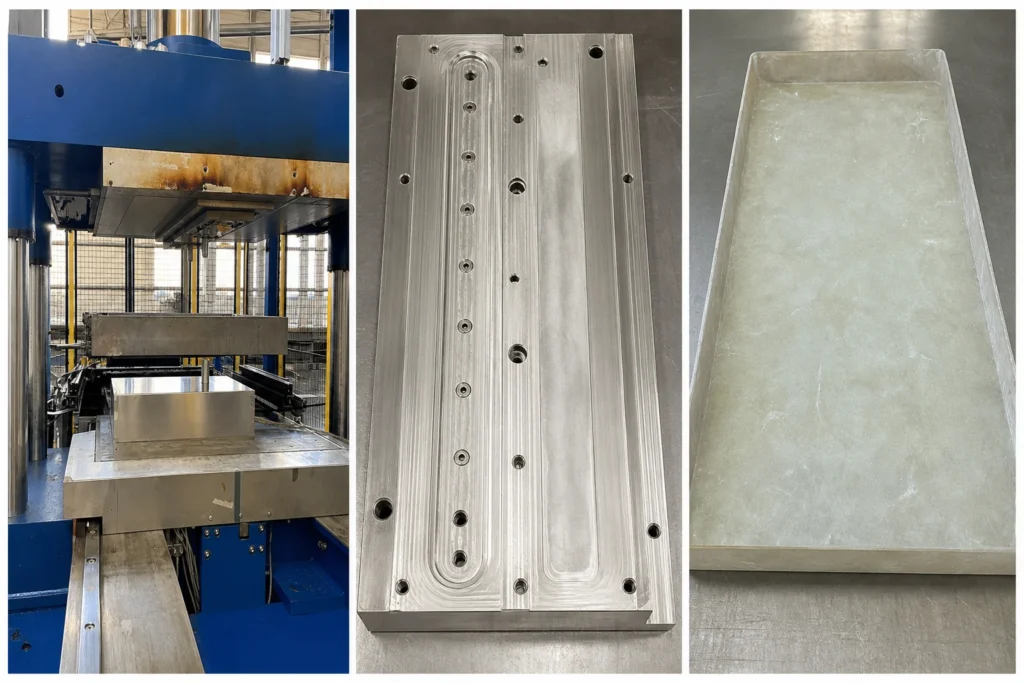
Process workflow
Production Process
In SMC/BMC compression moulding, a controlled compound charge is placed in a heated mould, closed under hydraulic pressure for the validated cure cycle, then opened for demoulding and inspection. The press and mould imagery is adapted from Imbsweiler et al. (2024). The post-demoulding specimen is adapted from Austermann et al. (2022), under CC BY 4.0. Cropped, composited and identifying marks removed. The equipment shown is not owned by SIHE.
- Prepare the SMC/BMC compound using the validated trial formulation
- Meter the charge and place it in the heated mould
- Close the mould and press at validated temperature, pressure and time
- Open the tool and demould the component
- Inspect mould fill, surface, shrinkage, cure and mechanical performance
Key Technical Parameters
- Appearance
- Red turbid liquid
- Typical viscosity
- 2000-2600 mPa.s
- Typical gel time
- Pending exact-model verification
- Non-volatile content
- 65-69 %
- Thixotropic index
- Pending exact-model verification
- Data scope
- Exact-model typical reference
- Test basis
- Source-document method; use the typical values for initial selection
The exact-model inspection image publishes 25 °C viscosity, acid value, and non-volatile content under GB/T 7193. It also contains a gel-time field but omits resin quantity, accelerator, initiator, solution concentration, and cure schedule; therefore the gel value remains internal and is excluded from public comparison. No exact-model peak temperature, Barcol hardness, tensile strength, or flexural strength is published with compound formulation, moulding conditions, and test standards. Inspection-sheet sample results are lot-specific rather than release ranges and therefore remain internal. Values on this page are typical material-screening data, not release specifications or batch-acceptance criteria. Only data with both an unambiguous model and applicable test conditions enter public comparison. A current dated TDS for the confirmed exact model and supply is provided through the Contact page during inquiry or order processing.
Source-document method; use the typical values for initial selection
Request Current Technical Documents
Request product information or a quotation
Tell SIHE about your application, process, and estimated quantity.