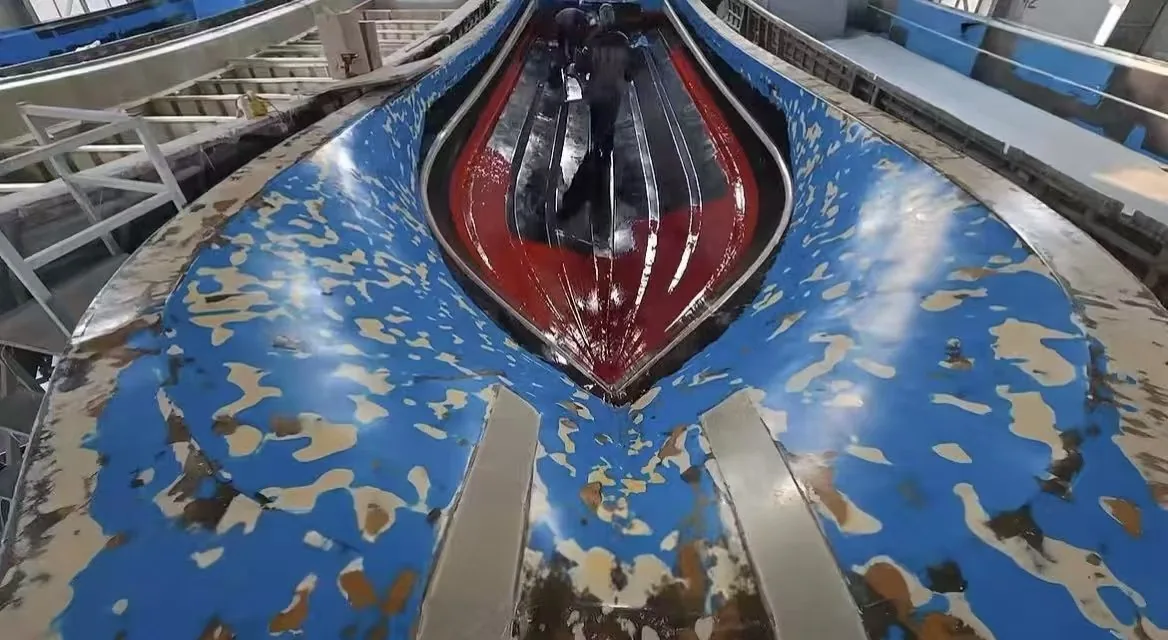
Composite Solution
Vacuum Infusion Composite Solutions

Resin-family and process-selection support for vacuum-infused FRP parts, based on part geometry, laminate architecture, flow path, temperature and production window.
Application Scope
Vacuum infusion moves resin through a dry reinforcement lay-up using a pressure differential. Resin flow is only one part of the system: reinforcement permeability, bag integrity, feed and vacuum-line layout, part thickness, mould temperature, fill time and cure conditions must be reviewed together.
SIHE uses these inputs to identify a candidate family and representative trial direction. No single viscosity or curing arrangement is presented as a universal answer for every infusion part.
Typical Products and Production Scenarios
Typical finished products
- Boat and marine composite structures
- Large FRP panels and shells
- Automotive and industrial composite parts
- Wind-energy housings and other closed-bag moulded structures
Production scenarios
- Representative infusion trials before full-size production
- Review of resin-feed, vacuum and flow-media layout
- Investigation of dry spots, air, fill-time or cure-control problems
Application and process reference

Common Production Goals and Challenges
- Filling the intended laminate without dry areas or unstable flow fronts
- Reducing entrapped air and detecting vacuum leaks
- Balancing fill time with the available working and gel window
- Managing cure exotherm, distortion and demoulding conditions
- Improving repeatability between representative lay-ups and production runs
Information Needed for Material Selection
- Part type and dimensions
- Part or laminate thickness
- Reinforcement type
- Lay-up architecture
- Planned resin-flow path and inlet/vacuum layout
- Vacuum stability and known leakage conditions
- Current resin viscosity or reported flow problem
- Target working time, ambient and mould temperature, cure conditions and current defects
Material Requirements
- Flow and wet-out behaviour matched to reinforcement and lay-up architecture
- A working and gel window confirmed against the representative fill path
- Cure behaviour reviewed for part thickness, mould and production temperature
- Compatibility with the customer's bagging, flow-media and process arrangement
- Representative inspection criteria for dry areas, air, cure and demoulding
Recommended SIHE Products
SIHE Vacuum Infusion Resin Series
Resins for vacuum infusion and related closed-mould processes. Each grade has its own processing window and application direction; SH9265 is identified separately for RTM.
- Why consider this product
- The current SIHE vacuum-infusion resin family provides the public starting point for closed-bag FRP parts that need flow, wet-out and working-window review.
- Confirm before selection
- Confirm part geometry, reinforcement and lay-up, thickness, flow path, vacuum stability, resin and mould temperature, target fill time, cure conditions and representative acceptance criteria.
This page represents a resin family rather than one fixed formulation. The listed grades and typical parameters support preliminary selection. SIHE confirms the actual delivery grade according to the application and production process.
How SIHE Supports Material Selection
Share the finished-product, application and production-process requirements.
SIHE reviews the production conditions, current materials and reported problems.
SIHE identifies candidate product families or grades for representative evaluation.
Quotation, sample and document availability are confirmed according to the reviewed request.
The automatic acknowledgement only confirms that the RFQ was saved. It is not a quotation, sample approval, inventory or delivery confirmation, or a final technical conclusion. Product and delivery-grade selection is confirmed by a SIHE representative after review.
Technical Documents and Samples
Controlled technical documents
General product information may be shown publicly. Current TDS documents are supplied through a controlled request, while SDS availability is reviewed for the selected product and market of use. SIHE does not promise that every grade has a current document in every requested language.
Manual sample review
Every sample request is reviewed manually. Availability, sample size, charges and shipping method are confirmed against the product, application, test plan, estimated demand and destination.
Share Your Application Requirements with SIHE
Tell us about your finished product, production process, current materials, target properties and estimated demand. SIHE will review the information before recommending a product family or delivery grade.